
We focus on one thing, and do it exceptionally well
Helping people throughout the Treasure Valley overcome dizziness, vertigo, and balance problems so they can return to the life they love.
As the area's dedicated, non-hospital-based vestibular clinic, we build individualized treatment plans around your symptoms, goals, and whole-body health, never a one-size-fits-all protocol.
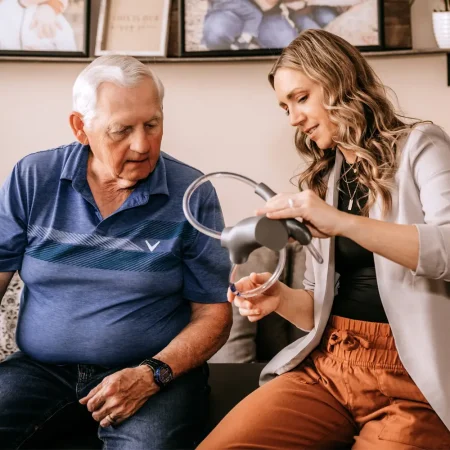
Vestibular Rehabilitation Therapy
Vestibular Rehabilitation Therapy (VRT) is a specialized, exercise-based form of physical therapy designed to retrain the connection between your inner ear, eyes, and brain. When that system is disrupted, the result is often dizziness, spinning (vertigo), imbalance, motion sensitivity, and visual disturbances, symptoms that can quietly drain your energy, focus, and quality of life.
VRT is one of the most effective treatments available for inner-ear-related dizziness. Vestibular physiotherapy uses precise maneuvers and exercises designed to address inner ear dysfunction and retrain the brain for better function, with the goal of improving stability and reducing dizziness.
Conditions we commonly treat with VRT
Inner-ear and balance disorders that respond to therapy
What to Expect from Vestibular Rehabilitation
Your care begins with a thorough evaluation of your balance, gait, eye movements, and the specific movements that provoke your symptoms. From there, we build a personalized plan that may include gaze-stabilization exercises to steady your vision during head movement, habituation exercises that gradually desensitize the brain to dizziness-provoking motion, and balance retraining. Some patients feel mild dizziness during habituation exercises, but this response is expected and actually helps the brain adapt. With consistent practice, including a simple home program, most patients see meaningful gains in both steadiness and daily confidence.
Repositioning Maneuvers for BPPV
For BPPV specifically, the most effective treatment is a series of guided head-and-body movements that reposition the displaced inner-ear crystals back where they belong. Through positional testing and a sequence of guided movements, therapists can often reposition these crystals, and many patients experience dramatic relief in as few as one or two sessions.
Balance Therapy Training
Feeling unsteady on your feet, hesitant on stairs, or afraid of falling is not something you simply have to accept as you age. Balance Therapy Training is designed to rebuild your stability, strength, and confidence so you can move through your day, and the Treasure Valley's hiking trails, sidewalks, and stairs, without fear.
Falls are a serious and common concern. According to the CDC, one in four Americans aged 65 and older falls each year, and falls are the leading cause of both fatal and non-fatal injuries among older adults. Beyond the physical impact, a fall can create a fear of falling that leads to reduced activity and social isolation, which further compromises health. Balance training breaks that cycle.

Who benefits from balance therapy
Rebuilding steadiness, strength, and confidence
What to Expect from Balance Therapy
We start with a comprehensive balance and fall-risk assessment. This often includes validated clinical tests such as the Berg Balance Scale and the Timed Up and Go (TUG) test, along with analysis of gait, strength, and flexibility, to establish a clear baseline and pinpoint exactly where your stability is breaking down. Your customized program then blends strength training, static and dynamic balance work, gait training, and functional movements that mirror real daily activities. The most effective fall-prevention programs combine resistance training and balance exercises within a well-structured plan, and we adjust yours as you progress so it keeps challenging you safely.
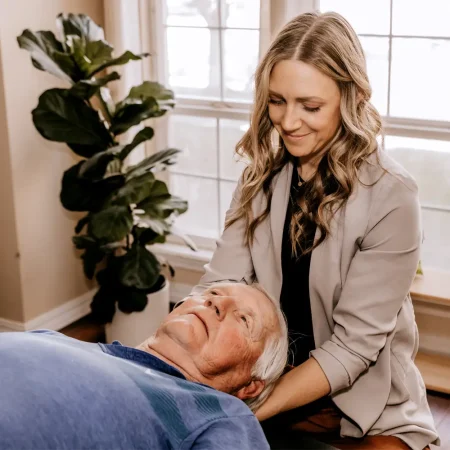
Treatment for Cervical Issues
Not all dizziness comes from the inner ear. Sometimes the neck is the source, and because the symptoms can feel identical, this connection is frequently overlooked. Cervicogenic dizziness is a sensation of unsteadiness or disorientation that arises from dysfunction in the cervical (neck) spine.
The neck is densely packed with position sensors (proprioceptors) that work alongside your eyes and inner ear to tell your brain where your body is in space. When neck movement, posture, or injury disrupts those signals, the result can be dizziness, imbalance, and lightheadedness, usually paired with neck pain or stiffness. Cervicogenic dizziness affects roughly 5–6% of adults with neck pain and stems from dysfunction in the upper cervical spine. It often develops following a whiplash injury or alongside degenerative changes in the cervical spine.
How we treat cervical dizziness
Targeting the neck, the true source of symptoms
What to Expect from Cervical Treatment
Because cervicogenic dizziness can mimic inner-ear disorders, accurate diagnosis matters. Our therapists carefully assess the neck and rule out other causes before treating the true source. Physical therapy is one of the most effective treatments, focused on releasing muscle tension and improving joint mobility rather than masking symptoms.